Skip to recommendations
Atlas of Books

Your next reading path

Books like Thinking, Fast and Slow

by Daniel Kahneman

23 connected reads, with a reason for every recommendation.

Cover of Thinking, Fast and Slow

Start here

8 reading possibilities
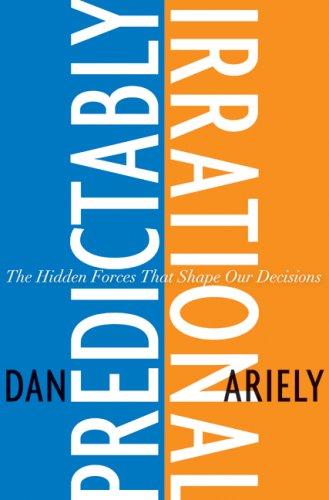
  1. 01Cover of Predictably Irrational

    It offers an accessible account of systematic errors that make human choices less rational than people expect.

    • behavioral economics
    • cognitive bias
    • accessible
  2. 02Cover of The undoing project

    The undoing project

    Michael Lewis

    It presents the intellectual partnership between Kahneman and Amos Tversky that transformed the study of judgment.

    • psychology
    • behavioral economics
    • biographical
  3. 03Cover of Misbehaving

    Misbehaving

    Richard H. Thaler

    It traces the development of behavioral economics and its challenge to traditional economic assumptions.

    • behavioral economics
    • decision making
    • intellectual history
  4. 04Cover of The Remains of the Day
    An unexpected connection

    Its restrained narrator offers a compelling fictional study of selective memory, professional judgment, and self-deception.

    • literary fiction
    • self-deception
    • English country house
  5. 05Cover of The art of thinking clearly

    The art of thinking clearly

    Rolf Dobelli, Rolf Dobelli

    Its brief chapters catalog recurring thinking errors in a format suited to readers interested in cognitive bias.

    • cognitive bias
    • reasoning
    • practical
  6. 06Cover of The Righteous Mind

    The Righteous Mind

    Jonathan Haidt

    It examines how intuitive judgments shape moral reasoning and political disagreement.

    • moral psychology
    • intuition
    • social
  7. 07Cover of The Intelligence Trap

    It investigates why intelligence alone does not protect people from poor reasoning and biased judgment.

    • reasoning
    • metacognition
    • psychology
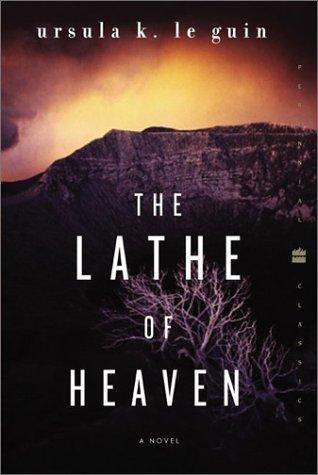
  8. 08Cover of The Lathe of Heaven
    An unexpected connection

    The Lathe of Heaven

    Ursula K. Le Guin

    It turns questions about cognition and unintended consequences into a speculative exploration of reality-changing dreams.

    • science fiction
    • reality
    • ethical
Explore 15 more recommendations
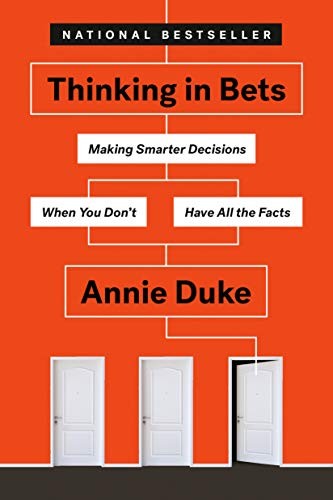
  1. 09Cover of Thinking in Bets

    It presents decision making as probabilistic reasoning under uncertainty rather than as a search for certainty.

    • decision making
    • uncertainty
    • practical
  2. 10Cover of Scout Mindset

    Scout Mindset

    Julia Galef

    It argues for examining evidence with curiosity instead of defending conclusions as though they were identities.

    • reasoning
    • beliefs
    • self-improvement
  3. 11Cover of The Paradox of Choice

    The Paradox of Choice

    Barry Schwartz, Ken Kliban

    It analyzes how an abundance of options can complicate decisions and reduce satisfaction.

    • decision making
    • consumer psychology
    • modern life
  4. 12Cover of The Left Hand of Darkness
    An unexpected connection

    The Left Hand of Darkness

    Ursula K. Le Guin

    It challenges intuitive assumptions about identity and society through an anthropological journey on an alien world.

    • science fiction
    • social psychology
    • winter planet
  5. 13Cover of The Signal and the Noise

    It distinguishes useful information from distracting data while examining the limits of prediction.

    • statistics
    • prediction
    • uncertainty
  6. 14Cover of The Black Swan

    The Black Swan

    Nassim Nicholas Taleb

    It challenges confidence in prediction by focusing on rare events and the narratives built around them.

    • uncertainty
    • risk
    • philosophy
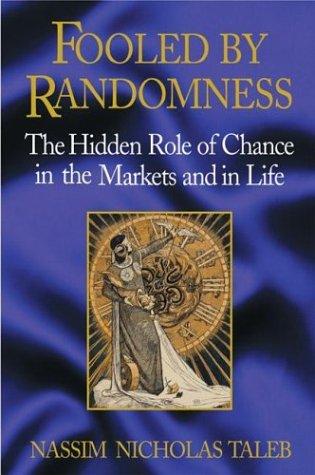
  7. 15Cover of Fooled by randomness

    Fooled by randomness

    Nassim Nicholas Taleb

    It shows how people mistake chance for skill when interpreting success, failure, and financial outcomes.

    • probability
    • risk
    • cognitive bias
  8. 16Cover of The Dispossessed
    An unexpected connection

    The Dispossessed

    Ursula K. Le Guin

    It tests competing social systems by examining how beliefs, incentives, and institutions shape human choices.

    • science fiction
    • political philosophy
    • utopian
  9. 17Cover of The Drunkard's Walk

    The Drunkard's Walk

    Leonard Mlodinow

    It explains how randomness shapes events that people commonly interpret as intentional or predictable.

    • probability
    • statistics
    • accessible
  10. 18Cover of The Organized Mind

    The Organized Mind

    Daniel J. Levitin

    It connects cognitive limits and attention to practical strategies for managing information-rich lives.

    • cognition
    • attention
    • practical
  11. 19Cover of Stumbling on Happiness

    It explores why people often misjudge what will make them happy when imagining the future.

    • psychology
    • decision making
    • well-being
  12. 20Cover of The Man Who Mistook His Wife for a Hat
    An unexpected connection

    Its clinical narratives reveal how perception and identity can diverge from ordinary assumptions about the mind.

    • neurology
    • cognition
    • case studies
  13. 21Cover of The Happiness Hypothesis

    It combines psychological research and philosophical traditions to investigate how people form judgments about a good life.

    • moral psychology
    • well-being
    • ideas
  14. 22Cover of The Blank Slate

    The Blank Slate

    Steven Pinker, Victor Bevine, Roc Filella Escolà, ʻImanuʾel Loṭem

    It uses cognitive science and evolutionary reasoning to challenge influential assumptions about human nature.

    • cognitive science
    • human nature
    • argumentative
  15. 23Cover of Piranesi
    An unexpected connection

    Piranesi

    Susanna Clarke

    Its isolated narrator makes perception, memory, and evidence central to a mysterious exploration of an impossible world.

    • fantasy
    • memory
    • labyrinthine