Your next reading path
Books like The Man Who Mistook His Wife for a Hat
24 connected reads, with a reason for every recommendation.

Start here
8 reading possibilities- 01

Sacks explores seven extraordinary neurological cases, connecting clinical observation with the patients’ distinctive ways of experiencing the world.
- 02
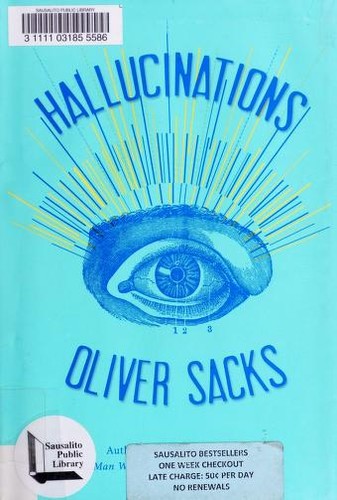
This study investigates hallucinations arising from neurological, sensory, and psychological conditions with Sacks’s characteristic humane curiosity.
- 03

Sacks recounts his treatment of patients affected by encephalitis lethargica and reflects on consciousness, recovery, and medical uncertainty.
- 04
 An unexpected connection
Keyes’s classic novel uses an experimental change in intelligence to explore personhood, perception, and the treatment of difference.
- 05

These cases focus on changes to vision, reading, recognition, and imagination, making perception itself the central subject.
- 06

Doidge presents clinical stories showing how brains can reorganize themselves after injury or developmental difference.
- 07

The book surveys neurological rehabilitation approaches through patient-centered accounts of recovery and adaptation.
- 08
 An unexpected connection
Haddon presents a mystery through a highly distinctive cognitive viewpoint, foregrounding interpretation, routine, and communication.
Explore 16 more recommendations
- 09

Kean uses memorable neurological injuries and historical episodes to explain how scientists mapped the brain.
- 10

This accessible overview connects brain systems with perception, memory, emotion, and behavior.
- 11

Ananthaswamy investigates neurological disorders that expose how the brain constructs the self and a sense of reality.
- 12
 An unexpected connection
Bauby’s memoir conveys the inner life of a man with locked-in syndrome and the fragile relationship between body and mind.
- 13

Damasio argues that feeling and bodily awareness are essential to consciousness and the construction of self.
- 14

Damasio uses neurological evidence to show how emotion and bodily signals shape reasoning and practical judgment.
- 15

Ramachandran describes striking neurological phenomena, including phantom limbs and altered body perception, to illuminate brain function.
- 16
 An unexpected connection
Powers builds a family drama around brain injury, altered recognition, and the uncertain boundaries of personal identity.
- 17

This collection uses unusual neurological cases to explain perception, language, creativity, and the brain’s interpretive habits.
- 18

Blakeslee explores how the brain constructs body maps and how those maps can become distorted or disrupted.
- 19

Levitin explains how attention and memory work amid modern information overload and everyday demands.
- 20
 An unexpected connection
Wells reverses assumptions about normal perception in a thought experiment about blindness, knowledge, and social authority.
- 21

Kahneman describes two interacting modes of thought and the biases that shape perception, judgment, and choice.
- 22

Tavris and Aronson explain how cognitive dissonance encourages people to defend mistaken beliefs and actions.
- 23

Ronson investigates psychiatric labels and diagnostic authority through encounters with clinicians, patients, and institutions.
- 24
 An unexpected connection
Saramago uses a sudden epidemic of blindness to examine perception, dependency, morality, and collective behavior.