Your next reading path
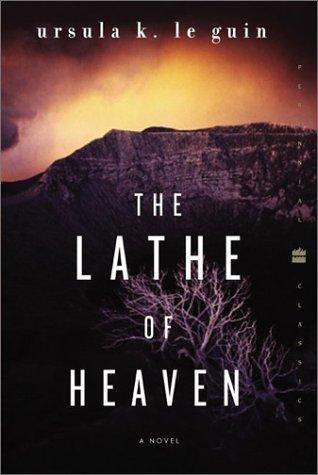
Books like The Lathe of Heaven
23 connected reads, with a reason for every recommendation.
Start here
8 reading possibilities- 01

Le Guin’s study of competing societies similarly uses speculative world-building to question power, idealism, and the possibility of meaningful social transformation.
- 02

This psychologically observant science-fiction classic shares Le Guin’s interest in altered social assumptions, cultural estrangement, and the ethics of human connection.
- 03

Philip K. Dick’s unstable alternate reality offers a similarly unsettling inquiry into constructed worlds, perception, and the consequences of changing history.
- 04
 An unexpected connection
Shepherd’s surreal post-apocalyptic world, where a mysterious loss of memory reshapes reality and society, provides a contemporary bridge from Le Guin’s dream-altered world.
- 05
Orwell’s dystopia complements Le Guin’s novel through its focus on institutional control, manipulated reality, and the psychological costs of imposed social order.
- 06

Atwood’s intimate dystopian perspective similarly examines how authoritarian social engineering reshapes identity, relationships, and personal agency.
- 07

Lem’s encounter with an incomprehensible intelligence shares the seed’s interest in reality, consciousness, and the limits of human attempts to control the unknown.
- 08
 An unexpected connection
Ogawa’s quiet island dystopia turns disappearing concepts into a study of psychological control, making it a subtle companion to Le Guin’s concern with reality and authority.
Explore 15 more recommendations
- 09

Clarke’s vision of humanity undergoing an unsettling transformation echoes Le Guin’s philosophical treatment of progress, intervention, and the future of the species.
- 10

Its shifting layers of reality and uncertain causality make it a strong match for readers drawn to dreamlike metaphysics and unstable perception.
- 11
 An unexpected connection
Carrington’s eccentric dream logic and playful resistance to institutional norms offer a more fantastical route into the seed’s themes of perception and social transformation.
- 12

McCarthy’s post-apocalyptic journey shares the seed’s concern with humanity’s impact on a damaged world and the moral choices that follow social collapse.
- 13

Miller’s long view of civilization links ecological devastation, technological power, and recurring human attempts to rebuild society.
- 14

Sturgeon’s exploration of unusual minds and collective consciousness provides a psychologically intimate counterpart to Le Guin’s concern with mental power and human connection.
- 15
 An unexpected connection
Ravn’s fragmented reports from a spaceship explore consciousness, labor, and nonhuman identity through an estranging form that will appeal to readers of Le Guin’s speculative philosophy.
- 16

Miéville turns socially enforced perception into a strange urban reality, making it a precise bridge from Le Guin’s interest in belief, institutions, and altered worlds.
- 17
Jemisin’s climate-ravaged world sharply extends the seed’s concern with nature, planetary instability, and the social consequences of ecological power.
- 18

Butler uses a speculative disruption of time to examine coercion, history, identity, and the painful limits of individual agency.
- 19
 An unexpected connection
Haushofer’s solitary survival narrative offers an intimate ecological counterpoint to Le Guin’s questions about humanity’s relationship with nature and civilization.
- 20

Wolfe’s far-future narrative rewards readers interested in ambiguous realities, ethically uncertain authority, and perception shaped by consciousness.
- 21
DuPrau offers a more accessible dystopian exploration of engineered societies, environmental limits, and the hope of discovering a better social order.
- 22

Ishiguro’s restrained speculative drama shares Le Guin’s focus on institutional systems, personhood, and the quiet moral cost of treating lives as instruments.
- 23
 An unexpected connection
Bioy Casares’s compact island mystery investigates technology, perception, and the unstable boundary between lived reality and constructed experience.