Your next reading path
Books like Possibility of an Island
23 connected reads, with a reason for every recommendation.

Start here
8 reading possibilities- 01

This politically charged novel shares Houellebecq’s detached voice and unsettling examination of cultural transformation.
- 02

Its stark vision of a diminished future pairs existential desolation with an austere inquiry into what remains human.
- 03
 An unexpected connection
Through workplace reports from a spaceship, Ravn gives an inventive, intimate form to questions about labor, embodiment, and becoming nonhuman.
- 04

Ishiguro’s restrained dystopia shares the seed’s concern with engineered futures, mortality, and emotionally estranged lives.
- 05

Atwood combines biotechnology, social satire, and a damaged future in a way that closely echoes the seed’s speculative pessimism.
- 06

Its controlled society and critique of ideology offer a powerful parallel to Houellebecq’s interest in social systems reshaping private life.
- 07
 An unexpected connection
This restrained island dystopia bridges the seed through its interest in disappearing identities and the psychological effects of social control.
- 08

Huxley’s engineered society provides an influential counterpart to the seed’s exploration of pleasure, reproduction, and posthuman possibility.
Explore 15 more recommendations
- 09
Orwell’s examination of managed reality and diminished autonomy complements the seed’s concern with civilization’s ideological pressures.
- 10

Wolfe’s far-future narrative similarly blends cultural decline, uncertain identity, and grand speculation about humanity’s endpoint.
- 11
 An unexpected connection
Miéville’s transformed Paris offers a stranger, more baroque route into the seed’s concerns with altered reality and cultural decay.
- 12

Its fractured city and unstable sense of self make it a more experimental companion to Houellebecq’s alienated speculative fiction.
- 13

Le Guin uses an altered social and biological order to examine identity, intimacy, and the assumptions underlying human society.
- 14

Lem’s encounter with an unknowable intelligence shares the seed’s interest in the limits of consciousness and human self-understanding.
- 15
 An unexpected connection
Carrington’s exuberant surrealism provides a radically different but revealing bridge through its satire of institutions, aging, and human destiny.
- 16

This concise Argentine classic explores recorded existence, desire, and the unsettling possibility of escaping ordinary mortality.
- 17
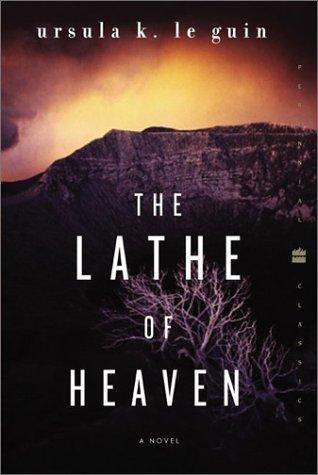
Its premise turns attempts to improve humanity into a meditation on control, unintended consequences, and the instability of reality.
- 18

Dick’s commercially mediated reality and uncertain humanity resonate with Houellebecq’s skepticism toward progress, desire, and technological salvation.
- 19

Clarke’s sweeping account of humanity’s transformation offers a more transcendent but similarly unsettling vision of species-level change.
- 20

Its comparison of competing societies provides a thoughtful counterpoint to the seed’s darker scrutiny of collective life and ideology.
- 21

Miéville’s divided reality turns social habits and ideological separation into an unsettling speculative structure.
- 22

Its disappearing memories and transformed humanity extend the seed’s interest in identity, continuity, and survival after radical change.
- 23

Mandel balances civilizational collapse with questions about art, memory, and the forms of human connection that endure.