Your next reading path
Books like Permutation City
24 connected reads, with a reason for every recommendation.

Start here
8 reading possibilities- 01

Egan’s ambitious novel follows varied forms of intelligence through a universe shaped by physics and computation.
- 02

A powerful artificial intelligence transforms human existence, making this a direct match for fiction about technology, identity, and post-scarcity consequences.
- 03

Its linked stories trace humanity’s transformation amid runaway computation, artificial intelligence, and increasingly strange forms of life.
- 04
 An unexpected connection
Across centuries after a nuclear catastrophe, this distinctive novel considers how knowledge is preserved, lost, and rebuilt.
- 05

This first novel in a series builds a far-future society around programmable identities, digital minds, and intricate technological speculation.
- 06

A mission to investigate an alien signal becomes a rigorously argued inquiry into consciousness and what intelligence might be without it.
- 07

This early simulation novel makes the nature of reality and the possibility of artificial worlds its central mystery.
- 08
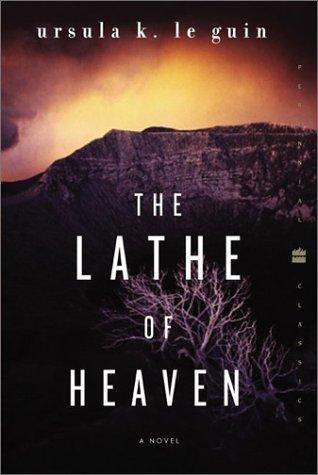 An unexpected connection
Le Guin turns a reality-altering premise into a thoughtful exploration of power, unintended consequences, and the desire to perfect the world.
Explore 16 more recommendations
- 09
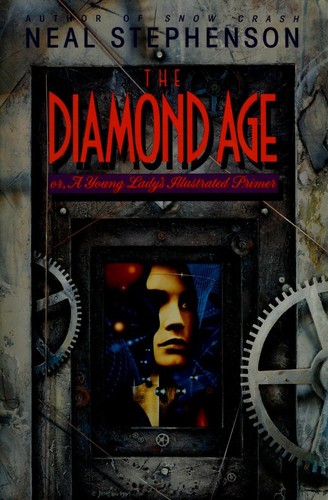
Stephenson imagines a society reshaped by nanotechnology, artificial intelligence, and competing visions of human development.
- 10

Its fast-moving story mixes virtual worlds, information systems, and a fractured near-future society.
- 11
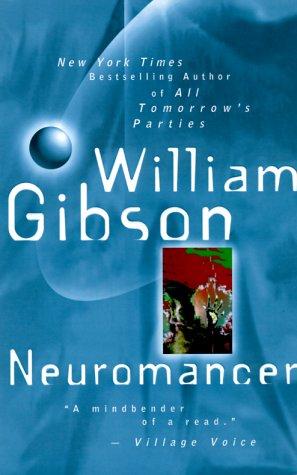
A foundational cyberpunk novel of networked intelligence and compromised identities, set in a gritty technological future.
- 12
 An unexpected connection
This densely imagined climate dystopia shifts attention from computation to biotechnology while retaining a focus on technology’s social costs.
- 13

Its sustained engagement with mathematics, philosophy, and the nature of reality suits readers who enjoy ideas-driven speculative fiction.
- 14
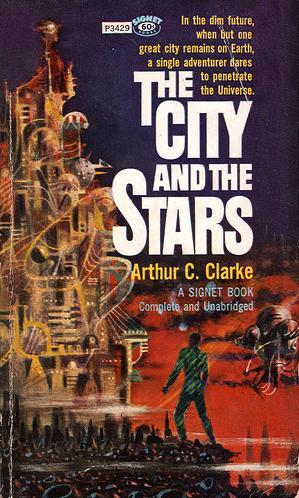
Clarke’s far-future vision of a technologically preserved city explores stasis, memory, and humanity’s place in the universe.
- 15
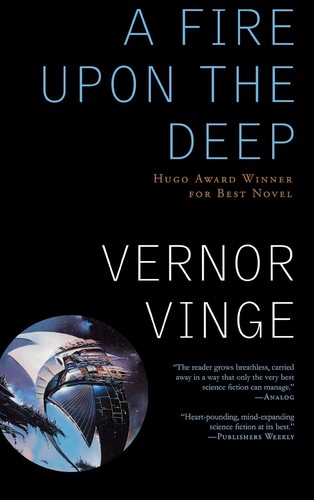
The first novel in a series combines vast interstellar scope with consequential questions about powerful machine intelligence.
- 16
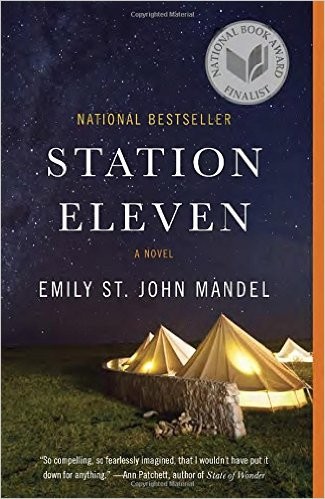 An unexpected connection
Its post-pandemic setting and reflective focus on what people preserve after collapse provide a quieter bridge to the seed’s apocalyptic elements.
- 17

Set in a near future transformed by ubiquitous computing, the novel considers how technology alters memory, learning, and social life.
- 18

Lem’s classic centers on the limits of human knowledge when confronted with an intelligence that resists familiar explanations.
- 19

Lem uses an unstable, perception-bending future to satirize technological fixes and the difficulty of distinguishing reality from illusion.
- 20
 An unexpected connection
The first volume of Wolfe’s series introduces a far-future world where remnants of advanced civilization feel mysterious and uncanny.
- 21

Its treatment of relativistic time and a rapidly changing society makes the consequences of advanced science central to its human story.
- 22

The first novel in the Night’s Dawn trilogy expands hard-edged technological speculation into a civilization-wide crisis.
- 23
A detailed encounter with an alien society gives its sweeping space opera the careful extrapolation and systems thinking of classic hard science fiction.
- 24
 An unexpected connection
Silverberg’s speculative society offers a contrasting, sociological take on how technological and demographic pressures reshape human life.
About the book
Permutation City is Greg Egan’s 1994 science-fiction novel, classified in the supplied record as hard science fiction and dystopian, with twenty-first-century and post-apocalyptic elements.
About the author
Greg Egan is an Australian science-fiction author widely associated with rigorous explorations of mathematics, physics, consciousness, and identity.