Your next reading path
Books like Les Misérables
22 connected reads, with a reason for every recommendation.

Start here
8 reading possibilities- 01

Like Les Misérables, this expansive French classic turns social injustice, imprisonment, and moral transformation into a sweeping historical drama.
- 02

Dickens’s novel shares Hugo’s interest in revolutionary France, suffering among the poor, and self-sacrifice amid violent political change.
- 03
Hugo’s earlier novel likewise combines historical spectacle with compassion for marginalized people and criticism of social cruelty.
- 04
 An unexpected connection
This gentler discovery shares Les Misérables’ faith in transformation through human connection while shifting from social epic to restorative communal comedy.
- 05

Its orphaned protagonist, criminal underworld, and indictment of institutional poverty closely echo Les Misérables’ social and emotional concerns.
- 06

Steinbeck’s epic follows dispossessed people confronting economic injustice while preserving the communal compassion central to Hugo’s novel.
- 07

This coming-of-age classic shares Les Misérables’ concern with vulnerable children, harsh institutions, and the possibility of ethical renewal.
- 08
 An unexpected connection
Buck’s intimate family epic connects through its portrayal of poverty, social hierarchy, endurance, and changing fortunes against a broad historical background.
Explore 14 more recommendations
- 09

Goldsmith’s family-centered novel explores poverty, misfortune, and moral endurance in a similarly sentimental tradition of humane social fiction.
- 10

Eliot’s novel offers psychologically rich social criticism about class, family constraint, and the destructive effects of rigid judgment.
- 11

Like Hugo’s epic, Middlemarch portrays an entire society while tracing how political ideals, private choices, and social inequalities shape ordinary lives.
- 12
 An unexpected connection
Its young outsider, wartime suffering, and emphasis on kindness under oppressive power provide a clear modern bridge to Hugo’s humane vision.
- 13

Hugo again pairs melodramatic adventure with an attack on inherited power and society’s mistreatment of outsiders.
- 14

Its vulnerable young protagonist and portrait of exploitation connect strongly with Hugo’s compassion for children exposed to poverty and predatory institutions.
- 15

Stendhal’s ambitious outsider navigates class hierarchy and political tension in a France portrayed with similarly sharp social awareness.
- 16
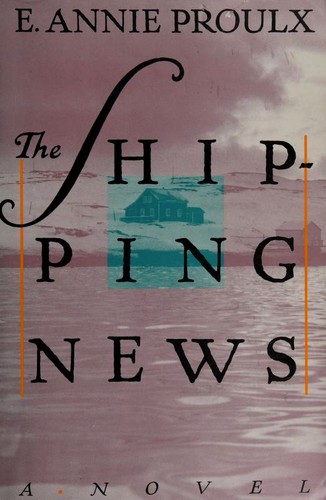 An unexpected connection
Proulx’s wounded protagonist finds dignity through an accepting community, offering a contemporary, austere counterpart to Hugo’s redemptive social vision.
- 17

Hawthorne’s historical novel examines public punishment, stigma, and individual conscience in ways that resonate with Hugo’s critique of judgment.
- 18

Sinclair’s exposé of exploited workers channels Les Misérables’ indignation at economic systems that reduce human lives to instruments.
- 19

Greene’s morally burdened protagonist offers a quieter but related investigation of guilt, mercy, and the limits of human judgment.
- 20
 An unexpected connection
Mistry’s ensemble novel is a powerful discovery for Hugo readers because it joins political repression, extreme poverty, and fragile human solidarity on an epic scale.
- 21

Hardy combines social pressures, personal remorse, and the long consequences of past actions in a tragic register familiar to Hugo readers.
- 22

Its isolated, mistrusted protagonist finds renewal through care for a child, making it a compact parallel to Hugo’s themes of exclusion and redemption.