Your next reading path
Books like Labyrinths
22 connected reads, with a reason for every recommendation.

Start here
8 reading possibilities- 01

Borges’s most direct companion volume, it develops fictional worlds, impossible libraries, secret societies, and metaphysical puzzles with similar precision.
- 02

This collection extends Borges’s fascination with infinite vision, unstable identity, labyrinths, and the collision of the ordinary with the impossible.
- 03

This foundational collection brings together Borges’s branching concepts of time, espionage, textual puzzles, and metaphysical uncertainty.
- 04
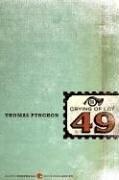 An unexpected connection
Pynchon’s ambiguous networks and competing explanations extend Borges’s fascination with hidden orders and the instability of interpretation.
- 05

Its elegant island mystery turns questions of perception, repetition, and reality into a compact speculative fable admired by Borges.
- 06

Calvino’s formally intricate city descriptions echo Borges’s imaginary geographies and fascination with systems that generate endless meanings.
- 07

This novel makes reading itself a labyrinth through interrupted narratives, nested texts, and playful uncertainty about authorship.
- 08
 An unexpected connection
Its dense invented mythology and disorienting geography offer a darker, more expansive discovery for readers drawn to Borges’s impossible worlds.
Explore 14 more recommendations
- 09

Kafka’s inaccessible authority and recursive bureaucracy provide a darker precursor to Borges’s interest in institutions, interpretation, and impossible quests.
- 10

Its abstract legal machinery and disorienting logic closely connect with Labyrinths’ themes of persecution and impersonal systems.
- 11

Beckett’s relentless inquiry into voice, identity, and the limits of language complements Borges’s subjective and metaphysical investigations.
- 12
 An unexpected connection
Gaddis’s elaborate meditation on imitation, authenticity, and cultural systems connects Borges’s textual puzzles with a sprawling modern novel.
- 13

Its comic metaphysics, recursive world, and unstable physical laws offer a more eccentric route into Borgesian conceptual fiction.
- 14

Carrington combines occult symbolism, bizarre institutions, and reality-bending invention in a way that resonates with Borges’s hermetic imagination.
- 15

Auster’s hybrid investigation of identity and authorship shares Borges’s interest in how texts construct, conceal, and multiply the self.
- 16

Buzzati turns an apparently rational military institution into an uncanny structure of endless waiting and distorted time.
- 17
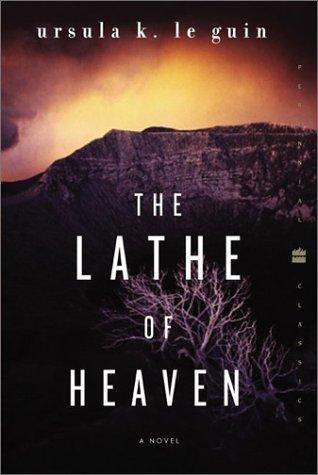
Le Guin’s premise makes private imagination alter the world, directly engaging the philosophical tension between subjective idealism and shared reality.
- 18

Lem’s enigmatic world exposes the limits of human categories and interpretation in a manner strongly aligned with Borges’s epistemological fiction.
- 19

These philosophical machine fables combine formal ingenuity, mock scholarship, and conceptual paradox in a playful Borges-adjacent mode.
- 20

Pessoa’s fragmentary inwardness and invented authorship deepen Labyrinths’ concern with unstable selves and reality filtered through language.
- 21

Its impossible architecture and layered documents make the physical book itself a labyrinth of interpretation.
- 22

This radically self-conscious novel anticipates Borges’s fictional libraries and explores how invented texts can become worlds of their own.