Your next reading path
Books like Exhalation
20 connected reads, with a reason for every recommendation.

Start here
8 reading possibilities- 01

Chiang’s earlier collection likewise turns speculative premises into precise, moving inquiries about language, choice, and human understanding.
- 02

Liu’s varied speculative stories pair inventive ideas with nuanced attention to memory, family, and identity.
- 03

These rigorous stories test how technology and scientific possibility might reshape consciousness, identity, and ethics.
- 04
 An unexpected connection
This Japanese science-fiction novel-in-stories uses a storytelling artificial intelligence to explore technology and human culture.
- 05

Liu combines conceptual science fiction with historical and fantastical settings in stories attentive to human consequences.
- 06

Le Guin’s collection offers imaginative premises and humane examinations of societies, relationships, and ways of knowing.
- 07

Bradbury’s linked tales use memorable futuristic conceits to consider technology, social change, and enduring human impulses.
- 08
 An unexpected connection
This compact, poetic science-fiction work bridges scientific invention and questions about creativity and consciousness.
Explore 12 more recommendations
- 09

Asimov’s connected stories make machine intelligence and its moral complications the center of sharply structured thought experiments.
- 10
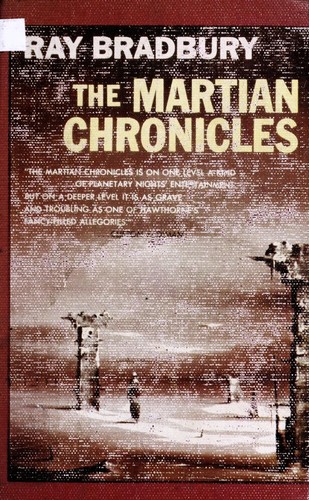
Its episodic vision of human settlement on Mars uses the cosmic scale to reflect on ambition, loss, and human nature.
- 11

Lem’s witty robot fables turn questions about intelligence, invention, and reality into inventive philosophical puzzles.
- 12
 An unexpected connection
Ravn’s report-like fragments examine how humans and artificial beings experience work, desire, and unfamiliar objects aboard a spacecraft.
- 13

Borges’s compact, idea-driven fiction shares Chiang’s interest in making abstract questions feel like vivid narrative discoveries.
- 14

These influential stories transform intellectual thought experiments about knowledge, time, and identity into intricate fictions.
- 15

Calvino imagines the universe’s origins through playful stories that combine scientific ideas with intimate human feeling.
- 16
 An unexpected connection
Fowler’s inventive, psychologically observant stories provide a quieter bridge from Chiang’s interest in human behavior.
- 17

This broad collection follows Asimov’s explorations of robotic behavior, logical dilemmas, and the boundaries of responsibility.
- 18

Lem’s comic space-travel episodes use alien encounters and paradoxes to probe human folly and the limits of reason.
- 19
Asimov’s stories bring scientific speculation to questions of technology, civilization, and humanity’s place in the universe.
- 20

Butler’s incisive speculative stories examine power, adaptation, and difficult ethical choices through deeply human conflicts.
About the book
Ted Chiang’s 2014 short-story collection explores science, artificial intelligence, and human behavior through literary science fiction.
About the author
Ted Chiang is an American writer widely recognized for conceptually ambitious, carefully crafted science fiction short stories.